Patent Offices Just Quietly Expanded What Counts As Prior Art: How Solo Inventors Can Stop Getting Blindsided In Searches
You did the sensible thing. You ran a quick patent search, saw nothing obviously fatal, and started drafting. Then months later, the examiner drops a reference you have never seen before. Maybe it is a foreign filing buried in a national collection. Maybe it is a conference talk, product demo, or other disclosure that was never sitting neatly in the one database you checked. That is brutal, and for solo inventors it can feel unfair.
The problem just got bigger. WIPO’s 2026 PCT search updates quietly widen the minimum search documentation used by international searching authorities. In plain English, more material from more places can now show up in the prior art pile. If your patent search strategy still means “search once before filing,” you are using an older playbook in a wider, messier world. The good news is you do not need a giant legal budget to respond. You do need a better routine, and it can be done in about 30 minutes a week.
⚡ In a Hurry? Key Takeaways
- The PCT 2026 prior art rules mean more worldwide material can be found and cited against your claims, so one quick pre-filing search is no longer enough.
- Start a simple weekly search habit across patents, foreign filings, technical publications, and public disclosures tied to your invention’s core features.
- This does not replace legal advice, but it can save you from spending time and filing fees on claims that were weak from day one.
What actually changed, in normal language
Patent offices did not suddenly invent prior art. What changed is the search net. Under the 2026 PCT updates, the minimum body of material that search authorities are expected to consider has been broadened. That includes more national patent collections, and the rules also make room for certain non-written disclosures to matter in a more formal way when they qualify under applicable law.
If that sounds technical, here is the simple version. The “I checked Google Patents and looked at the first page of results” method was already risky. Now it is riskier.
For solo inventors, the real danger is false confidence. You are not trying to prove your invention is unique in the universe. You are trying to avoid being surprised by art that can wreck novelty or obviousness later.
Why solo inventors get blindsided
1. They search only one database
One search tool is never the whole picture. Some are great for US records. Some are better for family data, classifications, legal status, or machine translations. A reference missing in one place may appear clearly in another.
2. They search only with their own wording
Inventors naturally describe an idea the way they built it. Examiners and competitors may describe the same thing with different words, older industry terms, broader categories, or translated phrases from another country.
3. They search once, then stop
This is a big one. Prior art searching is not a one-time event anymore. New publications appear. Foreign applications enter databases later. Product pages, conference materials, and standards documents can pop up after your first search session.
4. They ignore non-patent literature and public disclosures
A killer reference is not always a patent. It can be a thesis, white paper, standards draft, user manual, trade show presentation, YouTube demo, archived webpage, or academic poster. Not every disclosure counts everywhere in the same way, but enough of them do that ignoring them is a bad bet.
What “non-written disclosure” really means for you
This phrase scares people because it sounds vague. Think of it this way. If your invention was shown, explained, demonstrated, or made available to the public before your filing date, that event may matter, even if it did not start as a neatly indexed journal article.
Examples can include a public demo, a conference presentation, a lecture, a trade show display, or a product use that made the technical features available. The exact legal effect depends on the country and facts. Still, for search strategy, the lesson is simple. If people could see it, hear it, record it, cite it, or discuss it publicly, put it on your radar.
The new search mindset: stop asking “Did I find everything?”
You will not find everything. Even professionals do not claim that. A better question is this: “Have I searched enough sources, enough words, and enough neighboring concepts to avoid obvious surprises?”
That mindset lowers risk. It also helps you draft smarter claims. Sometimes the best result of a search is not “green light, file exactly as planned.” Sometimes it is “narrow claim 1, move this feature into a dependent claim, and write the spec to support fallback positions.” That is progress, not failure.
A 30-minute-per-week patent search strategy for inventors
This is the practical part. If you want a realistic PCT 2026 prior art rules patent search strategy for inventors, here is a simple routine you can keep up.
Minutes 1 to 10: Search the core invention in two patent databases
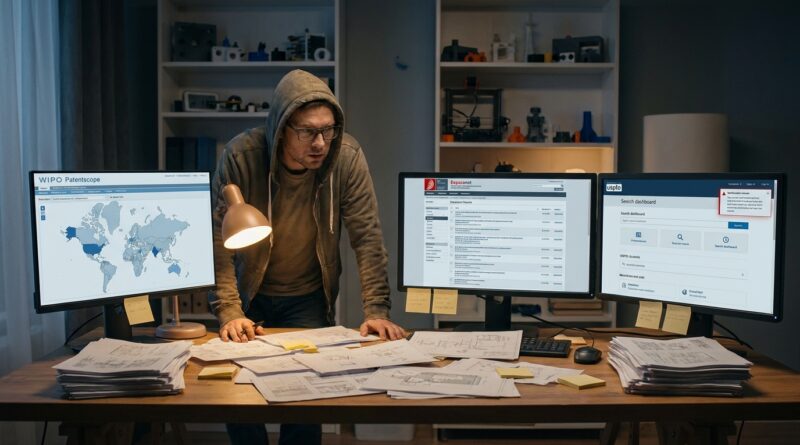
Use at least two tools. For example, Google Patents plus a second source such as Espacenet or PATENTSCOPE. Search:
- Your plain-English description
- Synonyms for each key feature
- Broader category terms
- Likely older industry language
Do not search the whole invention as one sentence. Break it into features. A wearable sensor with a detachable magnetic charging clip might also be described as a body-mounted monitor, removable power coupler, or contactless charging assembly. Different words find different art.
Minutes 11 to 15: Follow classifications, not just keywords
Once you find one decent reference, look at its patent classifications. These are gold. They group inventions by technical subject, and they often reveal documents you would never find by wording alone.
Open a few similar patents in the same class. Check cited references. Then check patents that cite them later. This is one of the fastest ways to move from random searching to structured searching.
Minutes 16 to 20: Search non-patent literature
Use Google Scholar, standard web search, conference sites, standards bodies, GitHub if software is involved, and product documentation pages. Search the same features you used in patent databases.
Add filetype searches where useful, such as PDF presentations or manuals. Search product names plus words like “datasheet,” “white paper,” “demo,” “poster,” “slides,” and “conference.”
Minutes 21 to 25: Search for public disclosures and market signals
Look beyond formal papers. Check YouTube demos, archived websites, Kickstarter pages, Amazon listings, forum threads, engineering blogs, and trade show exhibitor pages. You are looking for early public teaching, not just polished publications.
This part feels less official, but it is often where nasty surprises begin.
Minutes 26 to 30: Update your claim-risk sheet
Keep a simple spreadsheet with four columns:
- Feature or claim element
- Best reference found
- How close it is
- What you might change in drafting
If you do this every week while developing the invention, your filing gets stronger. You stop drafting in the dark.
How to search smarter, not harder
Build a synonym bank
Make a living list of alternate terms for every feature. Include technical terms, plain-English terms, old-fashioned terms, and likely translation variants. This is boring work, but it finds art.
Search the problem, not just the solution
If your invention reduces heat, noise, friction, battery drain, contamination, or setup time, search those problems too. Someone may have solved the same problem with a structure close enough to challenge your claims.
Search adjacent industries
A mechanism used in medical devices may show up first in automotive, packaging, aerospace, or consumer electronics. Examiners are very willing to mix references from nearby fields if the combination seems reasonable.
Watch patent families
One invention can appear in many countries with slightly different text, different translations, and different claim sets. If you find one useful family member, inspect the others.
What to do before you file
Before spending real money on an application, ask yourself three questions:
- What is my invention’s single most important new feature?
- What is my fallback position if that feature is already known?
- Have I searched both patents and public technical disclosures for that feature?
If your answer to the third question is no, pause and search more.
This is also where workflow matters. If you are preparing an international filing, smoother digital filing can free up time and attention for better search habits. Our piece on Paperless Patents Are Finally Here: How Small Inventors Can Turn EPO’s New ePCT Rules Into a Filing Shortcut is useful if you want the admin side to be less painful.
When to get professional help
You do not need to hire a search firm on day one. But you probably should get help if:
- You found several close references and cannot tell what is still new
- Your invention sits in a crowded field like software, medical devices, or electronics
- You are about to spend serious money on PCT filing, drawings, prototypes, or investor outreach
- Your strongest feature seems to appear in foreign-language documents you cannot interpret well
A professional search or patentability opinion costs money. Filing weak claims, then discovering they were dead on arrival, usually costs more.
Common mistakes to stop making now
- Relying on one database
- Searching only before filing, not during development
- Ignoring foreign documents because they look hard to read
- Ignoring demos, manuals, videos, and conference material
- Treating “no exact match found” as proof of patentability
At a Glance: Comparison
| Feature/Aspect | Details | Verdict |
|---|---|---|
| Old search habit | One database, one session, mostly keyword searching before filing | Too risky under the expanded 2026 PCT search environment |
| Better 2026 routine | Weekly multi-source checks using keywords, classifications, foreign family members, and non-patent literature | Best low-cost way for solo inventors to cut surprise prior art risk |
| Professional review | Patentability search or attorney analysis for close art, crowded fields, or high-stakes filings | Worth it when the invention or filing budget is significant |
Conclusion
The quiet change here is the dangerous kind. Nothing looks dramatic from the outside, but the prior art pool is getting wider, more global, and less friendly to the old “search once and hope” approach. This helps the Patentop community right now because WIPO’s 2026 PCT rule changes have expanded the minimum search documentation and formally pulled in more national collections and certain non-written disclosures into the prior art net. That means solo inventors need a better habit, not just more optimism. A simple 30-minute-per-week routine can help you spot weak claims earlier, draft stronger fallback positions, and avoid sinking money into an application that was headed for trouble. You do not need perfect certainty. You need fewer ugly surprises, and a search process that turns your what-if into something you can defend.