Only 10 U.S. States Grew Their Patent Filings: How Solo Inventors In ‘Flat’ States Can Still Win Big
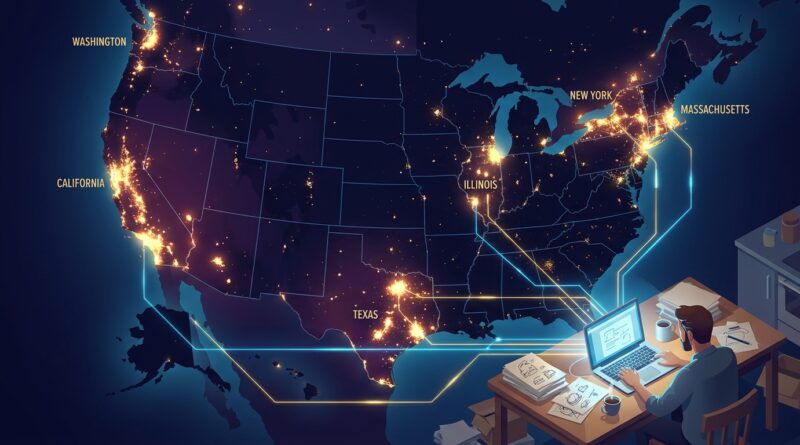
If you live outside the usual startup hotspots, this kind of news can feel like a punch in the gut. The latest patent filing trends by state 2021 2024 show that only 10 U.S. states actually grew their patent filings while most stayed flat or slipped. That is frustrating for solo inventors. It can seem like all the mentors, patent attorneys, investor meetups and university labs are somewhere else. Maybe you have a great idea, but your local scene feels quiet, scattered or just plain absent. Here is the good news. Patent success is not reserved for people in Silicon Valley, Austin or Boston. A weak local innovation scene is a disadvantage, yes. It is not a dead end. If your state is flat, the smart move is to stop waiting for local momentum and start building a geography-proof system that uses national programs, online expert help, federal resources and a tighter filing strategy.
⚡ In a Hurry? Key Takeaways
- Only a small group of states grew patent filings from 2021 to 2024, but inventors in slower states can still compete by using national and online support systems.
- Start with a focused patent search, a provisional filing, and outreach to federal, university and remote mentor programs instead of waiting for local help.
- Do not confuse a quiet local scene with a weak invention. Good records, smart timing and broader networks can matter more than your ZIP code.
What the data really means
When people hear that only 10 states grew their patent filings, the easy conclusion is that innovation is drying up everywhere else. That is too simple. A better read is this: innovation is clustering.
That matters because clusters create momentum. More patent lawyers. More startup groups. More technical meetups. More people who know how to turn an idea into a filing, a prototype and maybe a business. If you are in a state where filings stayed flat from 2021 to 2024, you may not be missing talent. You may just be missing infrastructure.
And infrastructure is easier to work around than talent.
Why solo inventors in flat states feel stuck
Most solo inventors do not need a pep talk. They need a map.
The usual problems are pretty predictable:
- Few local patent attorneys who understand your field
- No nearby inventor groups worth joining
- Little feedback before you spend money filing
- Less exposure to licensing, grants and prototype support
- A nagging fear that inventors in hot states are already ten steps ahead
All of that is real. But none of it means you should wait.
The winning mindset: stop building local-first
If your state is not growing its patent activity, do not build your strategy around local validation. Build around access.
That means asking a different set of questions:
- What can I do online that used to require a local network?
- Which federal programs do not care where I live?
- How can I file in stages so I protect my idea without overspending?
- Who can review my concept remotely before I go too far?
This shift matters. A lot of inventors lose momentum because they think they need a rich local ecosystem first. You do not. You need a repeatable process.
A geography-proof plan solo inventors can start this week
1. Start with a proper prior art search
Before you spend on drawings, prototypes or a full patent application, find out what already exists. Use Google Patents, the USPTO database and industry product searches. Look for patents that are close to your idea, not just exact matches.
Your goal is not to prove your idea is totally unique in every way. Your goal is to spot what is already claimed, then define what is actually new about your version.
If this step feels overwhelming, that is normal. But skipping it is how inventors burn money fast.
2. File a provisional application if you need time
A provisional patent application can be a smart bridge. It does not get examined like a nonprovisional application, but it can secure an early filing date and give you 12 months to refine your invention, test demand or talk to potential partners.
This is especially useful if you are in a flat state and do not have a lot of nearby guidance. It buys time. Just make sure the provisional is detailed enough to be useful later. A rushed, vague filing can create false confidence.
3. Use remote experts instead of waiting for local ones
Plenty of inventors still assume they need a lawyer in driving distance. You do not. Patent attorneys, patent illustrators, product designers and prototype shops work remotely every day.
What matters is not the ZIP code. It is whether they understand your category, explain things clearly and can show real experience.
When vetting help, ask:
- Have you worked on inventions like this before?
- What is included in your fee?
- Will you help me think through claim scope, not just paperwork?
- How do you communicate during the process?
4. Tap into federal and university programs
This is where inventors in flat states can make up ground fast. Many useful programs are national by design.
Look into:
- USPTO inventor resources and pro bono programs
- Small Business Development Centers
- SCORE mentors
- Manufacturing extension partnerships
- University entrepreneurship clinics that accept outside founders
- SBIR and STTR pathways if your invention has a research or technical angle
These programs do not magically make your invention patentable. But they can give you the missing structure your local area may lack.
5. Build a tiny advisory circle online
You do not need a giant network. You need three to five smart people who can spot blind spots.
That can include:
- One patent professional
- One person from your target market
- One technical reviewer
- One business-minded mentor
Meet on Zoom. Share short updates. Ask specific questions. Keep it simple.
A small, reliable remote circle is better than a giant local scene where nobody actually helps.
What inventors in strong-growth states still get wrong
Here is the part nobody says enough. Being in a busy patent state does not guarantee good decisions.
Inventors in hot regions often rush into expensive filings because the culture around them rewards speed. They chase investor buzz before proving demand. They file broad claims with weak support. They spend big on branding before they know if the core invention is defensible.
So yes, strong states have advantages. But flat-state inventors can beat them by being more disciplined.
Where to focus your money first
If your budget is limited, spend in this order:
- Prior art and market check
- Clear invention documentation
- A strong provisional or early attorney review
- Basic prototype or proof of concept if needed
- Customer feedback or licensing outreach
Do not start by spending heavily on trade shows, fancy logos or a broad filing you do not fully understand.
How to document your invention like a pro
This sounds boring. It is also one of the most useful habits you can build.
Keep dated records of:
- Sketches and design changes
- How the invention works
- What problem it solves
- Test results
- Prototype photos
- Conversations with manufacturers or possible buyers
Good documentation helps with patent drafting, business planning and later disputes about what was developed and when.
Do not wait for your state to become “innovation friendly”
This may be the biggest trap of all. It is easy to think, “Once my state adds more funding,” or, “Once I find a local incubator,” then things will click.
Maybe they will. But maybe that takes years.
The patent filing trends by state 2021 2024 are useful because they tell you where the map is uneven right now. They are not a reason to pause. They are a reason to plan around the gap.
The smartest inventors in slower states act like exporters. They do not depend on the local market for validation, connections or support. They reach outward early.
What “winning big” can actually look like
Winning does not always mean building the next giant tech company from your garage.
For a solo inventor, a big win might be:
- Getting a solid early filing date
- Licensing your idea to a larger company
- Using patent-pending status to open business conversations
- Landing a grant or pilot partnership
- Building a small but profitable niche business
That is worth remembering because discouraging headlines often make success look narrower than it really is.
At a Glance: Comparison
| Feature/Aspect | Details | Verdict |
|---|---|---|
| Local ecosystem strength | Growth states often have more nearby attorneys, mentors and startup groups. Flat states may have fewer in-person resources. | Helpful, but no longer essential if you use remote support well. |
| Best first move for solo inventors | Run a prior art search, document the invention clearly and consider a strong provisional filing. | This is the smartest low-drama starting point. |
| How to close the state gap | Use USPTO resources, online experts, national mentor programs and remote advisory circles. | Most practical path for inventors outside major innovation hubs. |
Conclusion
The fresh state-by-state numbers are a wake-up call. Innovation is bunching up in a few places, and much of the country risks turning into an IP desert. That is the bad news. The better news is that solo inventors do not have to follow the map anymore. If you are not in Boston, Austin or the Bay Area, you can still compete by using a clear, realistic system that does not depend on local momentum. Start with search and documentation. File in stages when it makes sense. Get remote expert help. Use federal and university programs that welcome people from anywhere. The point is not to ignore the gap. The point is to route around it. That turns discouraging patent filing trends by state 2021 2024 into something useful, a plan you can act on this week instead of a headline that tells you to give up.