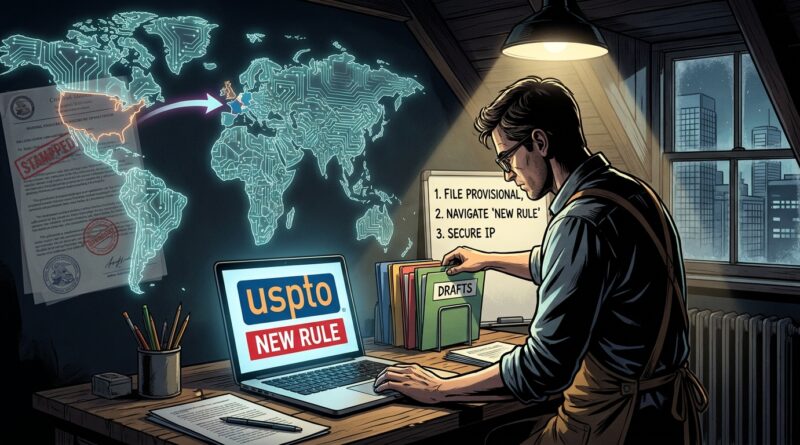
New USPTO Rule Just Raised the Bar for Foreign Filers: How Solo Inventors Can Still Go Global Without Getting Blocked
If you are a solo inventor outside the U.S., this new rule probably feels like one more locked door. You already have to think about patent timing, translation costs, drawings, and whether your idea is strong enough to protect. Now the USPTO has made one thing very clear. Foreign applicants and patent owners generally must work through a U.S.-licensed patent practitioner. That means you can no longer assume you will file directly and sort out representation later. Large companies will treat this as another line item. Small inventors cannot. The real risk is not just extra cost. It is delay, bad paperwork, missed deadlines, and getting pushed into expensive “full service” packages you may not need. The good news is you still have a path. If you prepare the right documents, ask smarter questions, and hire counsel for the parts that truly require it, you can still file in the U.S. without handing over control of your invention or your entire budget.
⚡ In a Hurry? Key Takeaways
- The new USPTO rule for foreign patent applicants in 2026 means most non-U.S. filers now need a U.S.-licensed patent practitioner to act before the USPTO.
- You can cut costs by preparing your invention summary, drawings, priority documents, and questions before hiring U.S. counsel.
- Do not wait until an office action arrives. Representation problems can slow your case, create avoidable fees, and put deadlines at risk.
What changed, in plain English
The core change is simple. If you do not live in the United States, the USPTO now expects you to be represented by a U.S.-licensed patent attorney or patent agent for patent matters before the office.
That may sound like a small procedural update. It is not. For many foreign inventors, it changes the whole filing path. What used to be a mostly DIY start, at least for some early steps, now begins with finding qualified U.S. help.
This is why the new USPTO rule for foreign patent applicants 2026 matters so much. It does not stop foreign inventors from filing in the U.S. But it does raise the entry cost and adds a gatekeeper.
If you want more background on the shift itself, see Foreign Inventors Just Got New USPTO Rules: How To File In The U.S. Without Losing Control Of Your Idea. It pairs well with the practical checklist below.
Why solo inventors get hit harder than big companies
A big company has an IP budget. It probably already uses U.S. counsel. It can absorb a few extra emails, a new engagement letter, and a higher bill.
A solo inventor usually cannot.
If you are building a patent strategy from outside the U.S., you may be doing all of this at once:
- Trying to decide whether to file locally first
- Figuring out if a PCT filing makes sense
- Paying for translations or technical drawings
- Managing secrecy rules in your home country
- Talking to investors who want “patent pending” yesterday
Add a mandatory U.S. practitioner on top, and the risk is obvious. You may hire the first firm that answers. That is usually when costs jump and control slips away.
What this rule does not mean
Let’s clear up a few common fears.
It does not mean foreign inventors are blocked from U.S. patents
You can still seek U.S. patent protection. The route is just more formal now.
It does not mean you need the most expensive law firm in New York or Silicon Valley
A solo inventor often needs focused help, not a giant package with strategy decks, endless calls, and extras that pad the invoice.
It does not mean you should rush and file bad paperwork
A weak application is still weak, even if a licensed practitioner submits it. Paying for representation does not magically fix a vague description or missing technical detail.
Your best move: Do the prep work before you hire U.S. counsel
This is where you can save real money.
Patent lawyers charge the most for time spent extracting basic facts from a client. If you hand them a clear, organized invention package, you shorten the learning curve and reduce billable hours.
Create a one-page invention summary
Keep it simple and readable. Include:
- The name of the invention
- The problem it solves
- How current products or methods fall short
- How your invention works
- The most important features you think are new
- Possible variations or backup versions
Write this like you are explaining it to a smart person outside your field. Not a scientist. Not an examiner. A smart neighbor.
Prepare a feature list
Make a table with two columns:
- Feature
- Why it matters
This helps your U.S. practitioner spot what may belong in the claims and what is just helpful background.
Gather visuals early
Even rough sketches help. Label each part. Show the front, side, top, workflow, or system architecture if relevant.
You do not need museum-quality art. You need clarity.
Build a timeline
Include:
- When you first conceived the idea
- Any public disclosure dates
- Prototype completion dates
- Investor pitches
- Sales, demos, crowdfunding, or trade show activity
- Any earlier filings in your home country or elsewhere
This can save you from nasty surprises later.
Documents to have ready before the first paid call
Think of this as your starter file.
- Inventor names and addresses
- Applicant or company ownership details
- A plain-English invention summary
- Drawings or sketches
- Any draft specification you already have
- Priority filing details, if you filed elsewhere first
- Assignments or ownership documents, if the company owns the invention
- A disclosure timeline
- Known competitor products or prior art references
- Your budget range and target countries
If your U.S. counsel has to chase all of this one piece at a time, the meter runs.
How to shop for U.S. counsel without getting trapped in a giant package
This part matters more than most inventors realize.
Some firms will try to sell a full end-to-end program right away. Filing, office actions, continuation strategy, global expansion, portfolio management, maybe even trademark work. For a venture-backed company, maybe that is fine. For a solo inventor, it can be overkill.
Ask these questions on the first call
- Do you offer a limited-scope engagement for initial filing only?
- Will you work from my draft and drawings to reduce cost?
- What is included in your flat fee, and what is billed separately?
- Who actually does the work, a partner, associate, or agent?
- How do you handle office actions later?
- Can you estimate costs for filing now versus full prosecution?
- If I filed first in another country or through PCT, how do you coordinate priority?
Ask for a fee breakdown, not just a headline price
A quote that says “U.S. patent package: $12,000” tells you almost nothing.
You want to know:
- Attorney drafting fees
- USPTO filing fees
- Drawing costs
- IDS or formal papers costs
- Foreign priority handling
- Office action response pricing
Watch for vague language
Be careful with phrases like “comprehensive protection” or “global strategy package” if nobody has explained what you actually need. Nice words can hide expensive extras.
A practical way to keep costs under control
If money is tight, think in stages.
Stage 1: Prepare your materials
Do the groundwork yourself. Organize the facts. Clean up the drawings. Write a solid invention summary.
Stage 2: Pay for a focused review
Ask a U.S.-licensed practitioner to review your materials and tell you:
- Whether the invention is described well enough
- What needs to be fixed before filing
- Whether a provisional, non-provisional, or PCT-related step makes sense
Stage 3: File the right application, not the fanciest one
Sometimes a carefully prepared provisional application buys time. Sometimes it does not. Sometimes a direct non-provisional filing is smarter. The right answer depends on your disclosure timeline, funding, and where you want protection.
Stage 4: Plan for prosecution before it starts
Ask now how later office actions will be billed. Many inventors only learn the real cost after the application is filed.
How this affects PCT and multi-country strategy
This is where confusion creeps in.
The new rule does not erase the PCT route or your regional filing options. It does mean that when your U.S. matters are before the USPTO, the representation requirement becomes central. So your filing strategy has to account for both timing and who is allowed to act.
If you already filed in your home country
You may still claim priority in the U.S., but your U.S. practitioner will need accurate details and documents. Have the filing number, filing date, applicant name, and certified copies ready or at least easy to obtain.
If you plan to use the PCT route
That can still be a useful way to buy time and keep options open across multiple countries. But do not assume it removes the need to line up U.S. counsel. It just changes when that conversation becomes urgent.
If you want only U.S. protection first
Then budget early for U.S. representation and make sure your first filing step does not clash with local foreign filing license rules in your own country.
Mistakes that can cost you months
These are the ones I would warn any friend about.
Waiting until a deadline is close
Lawyers can do rushed work, but rushed work costs more and often turns messy.
Sending a giant pile of notes with no structure
Ten voice notes and a folder of unlabeled images are not a filing package.
Assuming your local patent adviser can handle the U.S. side alone
Your local adviser may be excellent. But if they are not a U.S.-licensed practitioner, they may not be the person who can represent you before the USPTO under this rule.
Not clarifying ownership
If the invention belongs to a company, or partly to a founder and partly to a contractor, sort that out now. Ownership confusion causes painful delays.
Discussing the invention publicly before filing
This is still one of the easiest ways to weaken your position.
A simple email template for first contact with U.S. counsel
You do not need to sound formal. You need to sound organized.
Subject: Non-U.S. inventor seeking U.S. patent filing quote
Email:
Hello,
I am an inventor based in [country] seeking U.S. patent protection for [short description]. I understand that foreign applicants now need a U.S.-licensed practitioner for USPTO matters.
I have prepared the following materials:
– one-page invention summary
– drawings/sketches
– disclosure timeline
– details of any earlier filing or planned priority claim
Could you please let me know:
1. whether you offer a fixed-fee or limited-scope initial filing service,
2. what documents you need to provide a quote,
3. estimated filing costs and what is not included,
4. expected timing for review and filing.
Thank you.
That short message already puts you ahead of many clients.
At a Glance: Comparison
| Feature/Aspect | Details | Verdict |
|---|---|---|
| Foreign applicant representation | Most non-U.S. applicants and patent owners now need a U.S.-licensed patent practitioner to act before the USPTO. | Important change. Plan for it early. |
| Cost control | You can lower legal spend by preparing summaries, drawings, timelines, and ownership documents before the first paid engagement. | Best place for solo inventors to save money. |
| Global filing strategy | PCT and regional routes still work, but U.S. representation now needs to be part of your schedule and budget from the start. | Still workable, just less casual than before. |
Conclusion
The final rule is a real change, not a technical footnote. If you are outside the United States, you now need to treat U.S. representation as part of the filing plan from day one. That will be easy for big companies. It is much harder for solo inventors and small startups that need every dollar to count. Still, this is not the end of the road. If you prepare your materials well, keep your paperwork clean, ask for limited-scope help when possible, and compare counsel carefully, you can stay eligible to file in the U.S. without wasting months or paying for work you do not need. The smart move is not panic. It is preparation. Get organized first, then hire the right U.S.-licensed practitioner for the right task. That is how you stay in the game, avoid representation-related delays, and keep your wider PCT or regional strategy on track.