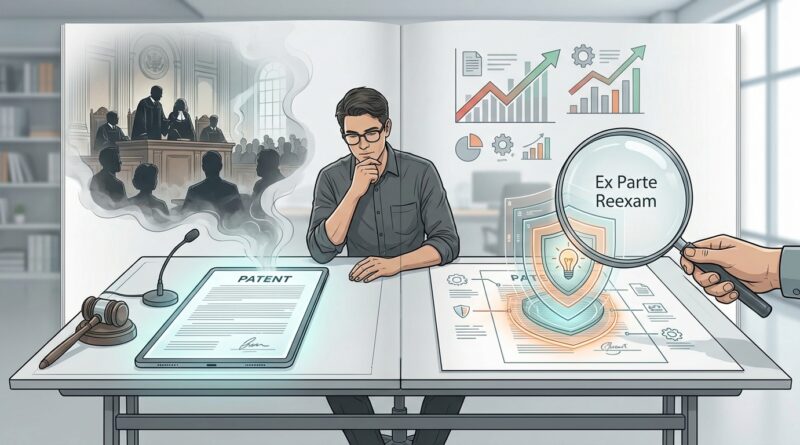
Ex Parte Reexams Just Overtook IPRs: How Solo Inventors Can Turn The New Validity Game Into A Shield, Not A Threat
If you are a solo inventor, patent risk already feels expensive, slow, and tilted toward bigger companies. Now the ground is shifting again. The flashy fight at the PTAB, the inter partes review or IPR, is slowing down. Meanwhile, ex parte reexamination is climbing fast. That matters because ex parte reexam is quieter, usually cheaper for challengers, and easier to miss if you are not planning for it. A large competitor does not always need a headline-grabbing PTAB battle to put pressure on your patent. They may just ask the USPTO to take another look. The good news is this is not only a threat. If you understand the new pattern early, you can draft better claims, build a better file history, and set aside the right budget before trouble starts. For solo inventors, that can turn a scary process into something you are prepared to survive, and sometimes even use to strengthen your patent.
⚡ In a Hurry? Key Takeaways
- Ex parte reexamination is becoming a more common way to challenge issued patents, so solo inventors should treat it as a real planning issue now, not later.
- Write your application with fallback claims, clear definitions, and strong examples so you have room to respond if the USPTO reopens review.
- This shift is not automatically bad news. A well-prepared inventor can use reexam to clarify claims and come out with a tougher patent.
Why this shift matters more than most inventors realize
Most small inventors have at least heard of IPRs. They are the high-profile PTAB challenges that got a reputation for being rough on patent owners. So when IPR filings fall, it is tempting to think the pressure is easing.
Not quite.
Unified Patents’ latest numbers show IPR petitions at an all-time quarterly low while ex parte reexam requests are at a historic high. In simple terms, the validity fight is moving into a different room. It is less public, often less dramatic, but still very real.
That means your ex parte reexamination patent strategy for solo inventors now matters in a practical, day-to-day way. Not just for litigators. Not just for venture-backed startups. For anyone filing a patent and hoping it lasts long enough to license, sell, or enforce.
If you want a broader look at this trend, Patentop recently covered it in Patent Reexams Are Quietly Replacing IPRs: How Solo Inventors Can Turn Challenges Into a Second Chance. The big takeaway is simple. The battlefield changed, even if many inventors have not noticed yet.
What ex parte reexamination actually is
Here is the plain-English version. Ex parte reexamination is a process where the USPTO takes another look at an already issued patent based on printed prior art, usually patents or publications.
A third party can request it. So can the patent owner.
Once the request is granted, the examiner and patent owner do most of the talking. The third-party requester has a limited role after the start. That is one reason this route can appeal to challengers. They can trigger a review without committing to the larger, more expensive PTAB-style fight.
How it feels from a solo inventor’s side
Think of it less like a courtroom battle and more like prosecution starting up again, except now your issued patent is under a microscope. The examiner reviews prior art and may reject some or all claims. You respond. You may amend claims. You may argue around the references. You work through office actions again.
That can be stressful. But it is also familiar. If you made it through examination once, the structure itself is not alien. The real problem is being caught unprepared.
Why challengers may prefer ex parte reexam right now
There are a few reasons this trend makes sense.
It can cost less
An IPR is a major proceeding. Ex parte reexam is usually a lower-cost way to create risk for a patent owner. For a large company facing a solo inventor, that math can be attractive.
It can be quieter
IPRs draw more attention. Reexams often feel more procedural and less headline-worthy. For a challenger, that can be useful. Pressure still lands on the patent owner, but with less noise.
It can still disrupt enforcement
Even if the challenger is not front and center later in the process, the reopened review can complicate licensing talks, scare off partners, or slow down enforcement plans. If your business depends on the certainty of issued claims, that disruption alone can do damage.
Why this is not only bad news for solo inventors
This is the part many people miss.
Ex parte reexamination is not automatically a death sentence for a patent. In some cases, it becomes a cleanup process. If your core invention is real and your specification is solid, reexam can give you a chance to tighten claims, clarify scope, and build a stronger record.
That does not make it fun. It does mean the right preparation can change the outcome.
Your practical defensive playbook
If you are filing now, or if you are still drafting a provisional, this is where to focus.
1. Put more detail in the specification than feels comfortable
Solo inventors often worry about cost and try to keep drafts lean. That is understandable. But thin disclosures create problems later. If reexam forces claim amendments, you need support already sitting in the application.
Include variations. Include alternative components. Include optional steps. Include narrower versions of your broad idea. Give your future self room to move.
2. Define key terms like a normal person would ask about them
If your invention uses words like “module,” “optimized,” “adaptive,” “secure,” or “portable,” stop and ask what those words actually mean in your system.
Vague terms invite trouble. During reexam, unclear language gives both examiners and challengers more room to say the prior art already covers your claim.
You do not need a dictionary section for every word. But for your important terms, add concrete explanations and examples.
3. Build fallback claims from day one
This is one of the smartest habits a solo inventor can adopt.
Do not file only broad independent claims and hope for the best. Add narrower dependent claims that capture real commercial versions of the invention. If the broad claim gets hit during reexam, a good fallback position can save the business value of the patent.
Ask yourself, “If I had to narrow this later, what version would still matter to a licensee?” Then claim that version now.
4. Keep your prosecution statements careful and consistent
Every argument you make during examination can matter later. If you overstate differences from prior art or box yourself into a narrow interpretation, those statements may come back during reexam.
You want to persuade the examiner without casually giving away claim scope. This is where good patent counsel earns their fee.
5. Budget for post-grant turbulence
This is the least glamorous advice and maybe the most important.
Many solo inventors budget to file and maybe to prosecute. Very few budget for what happens after issuance. But if ex parte reexam requests keep rising, your patent budget should include at least a basic reserve for post-grant defense, especially if you expect to approach larger companies.
You do not need a giant war chest. You do need a plan.
6. Organize your prior art story before anyone else does
Make sure you and your attorney have a clean record of the closest art, why your invention differs, and which features are most important. If a reexam starts, speed matters. You do not want to begin by reconstructing your own invention history from old emails and scattered notes.
How ex parte reexam differs from IPR in plain terms
IPR is more like a trial
It happens at the PTAB. There is a structured adversarial process. The challenger stays active. Costs can rise quickly. The pressure is obvious.
Ex parte reexam is more like renewed examination
It happens before the USPTO with an examiner. The patent owner does the responding. The challenger fades into the background after kickoff. It may feel less dramatic, but it can still reshape or weaken claims.
For solo inventors, the planning difference is huge
With IPR fear, many inventors focused mostly on broad validity strategy. With rising reexam risk, drafting quality and amendment flexibility become even more important. Your original application is now doing more defensive work.
What to ask your patent attorney this week
If you are working with counsel, bring these questions to your next call.
- Do my claims include strong fallback positions that still cover my likely product or licensing target?
- Does my specification support narrower amendments if prior art is raised later?
- Are my key technical terms defined clearly enough to survive a second look?
- Did we create any prosecution history that could make later defense harder?
- What would an ex parte reexam defense likely cost in my technology area?
If you are still at the provisional stage, ask an even simpler question. “If someone challenged this patent two years from now, would the current draft give us room to respond?” If the answer is shaky, fix that now while it is cheaper.
What solo inventors should not do
Do not panic and draft everything narrowly
You still want meaningful scope. The goal is balance, not surrender.
Do not assume an issued patent is finished
Issued does not mean untouchable. It means the next phase of planning starts.
Do not treat reexam as a rare edge case
The latest filing trend says otherwise. This is now part of normal patent risk management.
At a Glance: Comparison
| Feature/Aspect | Details | Verdict |
|---|---|---|
| Challenge style | IPR is an active PTAB fight. Ex parte reexam is a reopened USPTO examination focused on printed prior art. | Reexam is quieter, but still serious. |
| Best defense for a solo inventor | Strong specification support, clear terminology, and layered fallback claims make later amendments possible. | Drafting quality now can save the patent later. |
| Business impact | A reexam can delay licensing, complicate enforcement, and increase legal spend, even without a splashy PTAB case. | Plan a reserve and a response strategy before issuance. |
Conclusion
The patent system did not suddenly become easy for solo inventors. But it did become different. Unified Patents’ latest data shows IPR petitions hitting an all time quarterly low while ex parte reexams surge to an historic high, effectively flipping last year’s ratio of PTAB trials to reexams. For the Patentop community, that is not abstract policy chatter. It changes how you should draft, amend, and budget if you want your patent to survive long enough to license or enforce. The smart move now is simple. Treat ex parte reexamination as a standard risk, not a weird exception. Build support into your application, keep your claim set flexible, and talk with counsel about response costs before trouble starts. If a big competitor quietly asks the USPTO to reopen your patent tomorrow, the inventor who planned early will have more than fear. They will have options.